Topic Content
High Tenacity Polyester Yarn Supplier
High tenacity polyester yarn is considered when a textile application needs a polyester yarn option that can be discussed around tension, handling, and production use. For buyers, choosing a supplier is not only a matter of comparing a quoted price. The useful comparison covers the intended end use, yarn construction, sample confirmation, color requirements, quality inspection, and shipment communication.
Start with the Intended End Use
The same yarn category can be evaluated differently depending on where it will be used. Buyers may be sourcing yarn for weaving, knitting, ropes, hammocks, canvas, denim, pet toy ropes, or other textile products. Each application can place different expectations on yarn count, twist, ply, appearance, and machine running conditions.
Before asking for a quotation, describe the product that will be made, the production process, the expected order quantity, and any sample or color reference already available. This gives the supplier a practical basis for recommending an appropriate yarn option instead of treating every request as a standard product inquiry.
Confirm Yarn Type and Construction
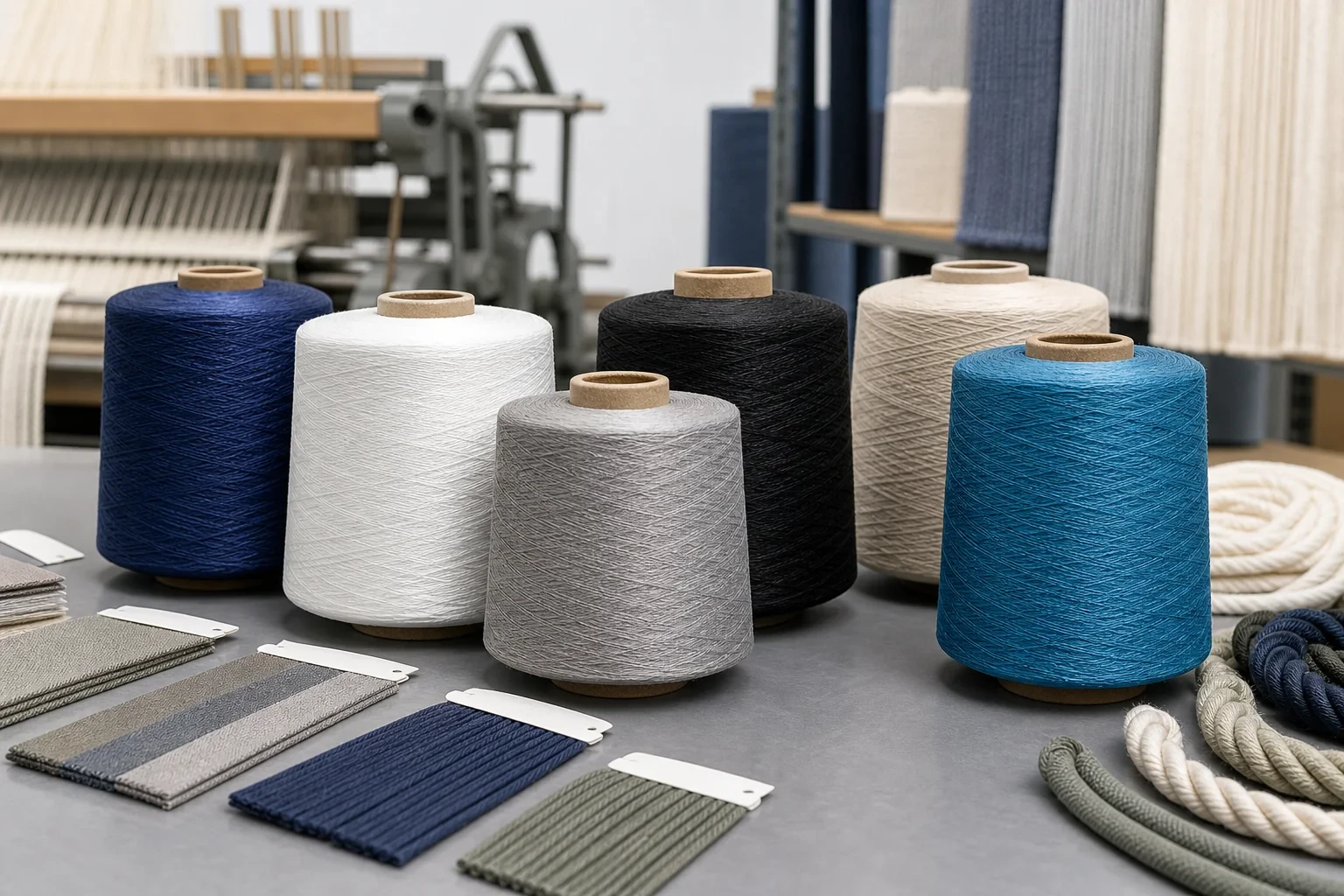
Polyester yarn can be supplied in different constructions and product ranges. A buyer may need polyester spun yarn, ring spun yarn, twisted yarn, or another construction suited to the final product. The correct choice depends on the required handling, surface appearance, production method, and downstream use.
Ask the supplier to state the yarn type, count, ply, twist direction, and packing format consistently on the quotation and sample label. Depending on the product type, the broader range may include counts such as 1s-2s, 2s-20s, 6S, 8S, 10S, 12S, 16/1, 21/1, 32/1, or Ne0.5s-Ne30s. These should be treated as options to discuss, not as a reason to select a count without checking the intended application and machine conditions.
Connect Strength Requirements with Production Conditions
The phrase “high tenacity” should lead to a specific production discussion. Explain where the yarn will experience tension, how it will be processed, and what problem the new yarn is expected to solve. A yarn for rope, hammock, canvas, or industrial textile use may need a different construction and handling balance from yarn used in a knitted or woven fabric.
Whenever possible, test a sample on the intended equipment. Note breakage, winding, feeding, surface appearance, and any adjustment needed during production. A supplier should be able to discuss the sample in relation to the application without promising performance that has not been checked in the buyer’s process.
Use Sampling to Compare Suppliers
A sample is a practical quality gate before a bulk order. The sample request should identify the yarn type, count, ply, twist, color, cone or package preference, and intended use. If the request is for a custom product, include the reference sample or clear written requirements so that the supplier and buyer are evaluating the same target.
After approval, keep a retained sample and record the agreed details. The approved reference can help both sides compare later production and resolve questions about yarn appearance, packing, or consistency. This is particularly useful when a buyer expects repeat orders or several colors.
Confirm Color and Appearance Before Bulk Production
Color should be confirmed with a physical color card, sample cone, lab dip, or another agreed reference whenever the order depends on a specific shade. A digital image can support communication, but lighting and screen settings can change how a color appears.
Also review the yarn cone, winding, surface cleanliness, visible thick or thin places, and any unwanted color contamination. The acceptable appearance should match the final application. Yarn for ropes, carpets, blankets, cleaning products, or pet toy ropes may be assessed differently from yarn used in fabric, socks, gloves, towels, or other products.
Review Packing, Inspection, and Shipment Details
Supplier evaluation continues after the yarn is spun. Ask how the yarn will be packed, labeled, counted, and protected during transport. Confirm cone weight, carton or bag information, gross and net weight, and the documents needed for receiving.
For overseas buyers, production scheduling and shipment follow-up are part of the purchasing process. A clear communication routine helps the buyer confirm sample approval, production timing, quality inspection, packing, and shipment status before the goods leave the supplier.
Questions to Ask a High Tenacity Polyester Yarn Supplier
- Which yarn construction is suitable for the stated end use?
- What count, ply, twist, and package details will be shown on the quotation and sample?
- Can the supplier prepare a sample for the intended weaving, knitting, rope, or other production process?
- How will color and appearance be confirmed before bulk production?
- What inspection and retained-sample steps will be used for the order?
- How will production scheduling, packing, and shipment follow-up be communicated?
How Taishi Textile Supports Yarn Buyers
Taishi Textile is a yarn manufacturer and supplier based in Cangnan, Wenzhou, Zhejiang, China, with more than 30 years of yarn manufacturing experience. Its product scope includes polyester yarn, high tenacity polyester spun yarn, recycled and regenerated yarn, cotton yarn, cotton polyester blended yarn, ring spun yarn, open end carded yarn, melange yarn, twisted yarn, mop yarn, crochet yarn, towel and fabric yarn, carpet and blanket yarn, socks yarn, glove yarn, hammock yarn, and knitting or weaving yarn.
For a high tenacity polyester yarn inquiry, buyers can provide the application, construction, count, color, sample requirements, and order expectations. Taishi Textile can then discuss yarn selection, color confirmation, sampling, production scheduling, quality inspection, and shipment follow-up within the scope of the request.
Frequently Asked Questions
What is high tenacity polyester yarn used for?
It may be considered for applications where the buyer needs to discuss yarn performance under production tension, including ropes, hammocks, canvas, denim, weaving, knitting, and other textile products. The final choice should be confirmed through the actual application and sample process.
What information should I send when requesting a quotation?
Include the end use, yarn construction, count, ply, twist, color, package preference, estimated quantity, destination, and sample requirements. Clear information helps the supplier respond with a more relevant yarn option.
Should I approve a bulk order from a photograph?
For a technically important order, a physical sample and an agreed reference are more useful than a photograph alone. Keep the approved sample so the bulk production can be compared against the same requirements.
A well-defined request makes it easier to compare high tenacity polyester yarn suppliers on relevant information rather than on a product name alone. When end use, construction, sampling, inspection, and shipment details are agreed early, the buyer has a clearer basis for making a bulk-order decision.