
Topic Content
Polyester Ring Spun Yarn for Weaving and Knitting
Polyester ring spun yarn is a practical option for textile buyers who need to compare yarn for weaving, knitting, or related fabric production. The right choice depends on the finished product, yarn count, color, twist, package, and machine conditions. A clear specification and sample review help buyers evaluate a supplier on usable production information rather than on the product name alone.
What Polyester Ring Spun Yarn Means
Ring spun yarn is made by drafting and twisting fibers into a continuous yarn structure. Polyester ring spun yarn can be considered when a buyer needs a polyester yarn for a defined fabric or textile application and wants to discuss construction, count, appearance, and production handling with the supplier.
Ring spinning is only one part of the purchasing decision. The same broad yarn category can be supplied in different counts, colors, twist levels, and package formats. The final selection should therefore be connected to the product that the mill will weave, knit, or otherwise manufacture.
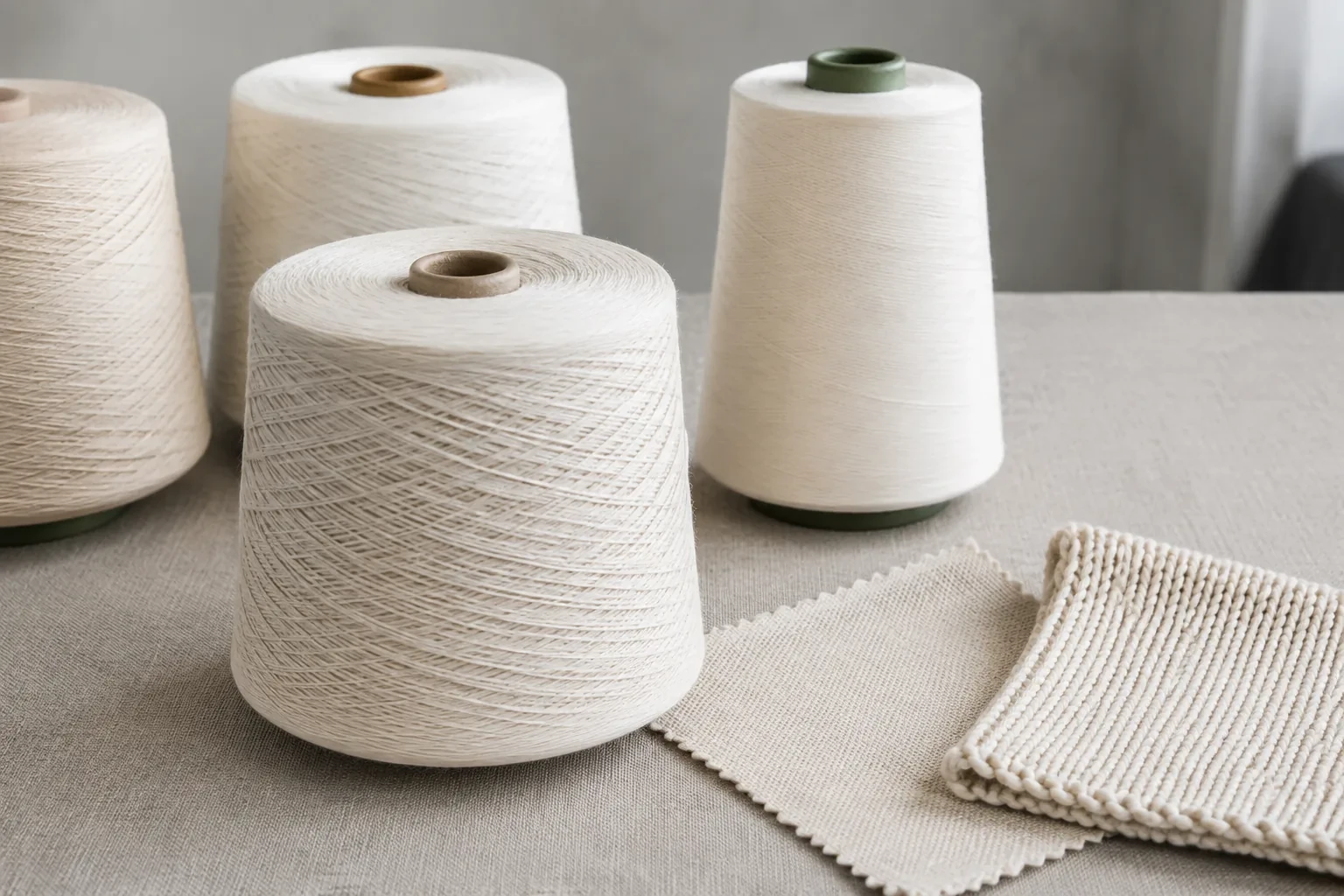
Weaving and Knitting Have Different Starting Points
Weaving and knitting place yarn into different fabric structures, so buyers should explain the production method before requesting a quotation. A weaving application may require discussion of yarn handling, warp or weft use, tension, and fabric construction. A knitting application may require attention to feeding, loop formation, fabric hand feel, stretch expectations, and surface appearance.
| Production use | Details to clarify | Useful sample checks |
|---|---|---|
| Weaving | Warp or weft use, fabric construction, yarn count, twist, and machine conditions | Running stability, visible defects, winding, and fabric appearance |
| Knitting | Knitting method, target fabric hand feel, count, color, and package requirements | Feeding, loop formation, surface appearance, and shade consistency |
| Other textile products | End use, required construction, color, packing, and order volume | Application fit, sample approval, and repeat-order consistency |
Confirm Yarn Count and Construction
Yarn count affects the structure and appearance of the finished textile. Taishi Textile's stated product range includes options such as 1s-2s, 2s-20s, 6S, 8S, 10S, 12S, 16/1, 21/1, 32/1, and Ne0.5s-Ne30s, depending on the product type and application. These ranges should be treated as options to discuss with the supplier, not as a reason to select a count without checking the planned fabric and machine.
Ask the supplier to state the count, fiber composition, twist, ply, color, and package information consistently on the quotation and sample label. If the project needs a specific construction or a repeat order, keep the approved sample and written specification as a shared reference.
Match Polyester Yarn to the Final Product
Polyester yarn can be considered for many textile uses, but the suitable construction depends on the product. A yarn for woven fabric may be evaluated differently from one for knitted fabric, towel and fabric production, socks, gloves, carpets, blankets, ropes, hammocks, or pet toy rope products. Buyers should describe the final use before comparing samples.
It is also useful to explain the expected appearance, color, and downstream process. If the yarn will be dyed, knitted, woven, twisted, or combined with another yarn, the supplier needs that context to discuss an appropriate option. A general product label is not enough to confirm performance in a specific production line.
Use Sampling Before a Bulk Order
A sample cone gives the buyer and supplier a practical way to check whether the proposed yarn matches the intended application. The request should include the end use, yarn type, count, color, twist or ply, package preference, estimated quantity, and any reference sample.
Whenever possible, run the sample on the intended or a comparable machine. Check feeding or winding, breakage, visible thick and thin places, hairiness, surface cleanliness, fabric appearance, and shade. For a sensitive order, a physical sample and an agreed reference are more reliable than a photograph alone.
After approval, retain the sample and record the details that were accepted. This gives both sides a clear basis for comparing bulk production and later repeat orders.
Review Color, Packing, and Shipment Details
Color should be confirmed with a physical color card, sample cone, lab dip, or another agreed reference when the order depends on a particular shade. Digital images can help with preliminary communication, but lighting and screen settings can change how color appears. Melange, bleached white, raw pattern, and custom color requirements should each be described clearly.
Packaging details also belong in the order discussion. Confirm cone or package information, labeling, gross and net weight, carton or bag requirements, and the documents needed for receiving. For overseas buyers, production scheduling, quality inspection, and shipment follow-up help connect the approved sample with the delivered order.
Questions to Ask a Ring Spun Yarn Supplier
- Which polyester ring spun yarn count and construction fit the planned weaving or knitting application?
- How will the fiber composition, count, twist, ply, color, and package be shown on the quotation and sample?
- Can the supplier prepare a sample for the buyer's intended machine and end product?
- How will color and visible yarn appearance be confirmed before bulk production?
- What sample, inspection, packing, and shipment records will be kept for repeat orders?
How Taishi Textile Supports Yarn Buyers
Taishi Textile is a yarn manufacturer and supplier based in Cangnan, Wenzhou, Zhejiang, China, with more than 30 years of yarn manufacturing experience. Its stated product scope includes polyester yarn, polyester ring spun yarn, high tenacity polyester spun yarn, recycled and regenerated yarn, cotton yarn, cotton polyester blended yarn, open end carded yarn, melange yarn, twisted yarn, mop yarn, towel and fabric yarn, carpet and blanket yarn, socks yarn, glove yarn, hammock yarn, crochet yarn, and knitting or weaving yarn.
For a polyester ring spun yarn inquiry, buyers can provide the weaving or knitting process, end product, count, color, package requirements, sample expectations, and estimated order volume. Taishi Textile can then discuss yarn selection, color confirmation, sampling, production scheduling, quality inspection, and shipment follow-up within the scope of the request.
Frequently Asked Questions
Is polyester ring spun yarn suitable for both weaving and knitting?
It can be considered for both applications, but the suitable count, construction, color, and package depend on the planned fabric and machine. Buyers should confirm the specification through a sample process.
What information should I provide when requesting a quotation?
Share the end product, weaving or knitting method, yarn type, count, fiber composition, color, twist or ply, package preference, estimated quantity, destination, and sample requirements.
Should I select a yarn count from the available range without testing?
No. A listed count range is a starting point for discussion. The final count should be checked against the fabric structure, machine conditions, sample result, and the requirements of the finished product.
A well-defined production request makes it easier to compare polyester ring spun yarn suppliers. When the application, construction, sample, color, inspection, and shipment details are agreed early, buyers have a clearer basis for selecting yarn for weaving or knitting.