Topic Content
100% Cotton Yarn Manufacturer
Buying 100% cotton yarn starts with a clear description of the textile you intend to make. A yarn that suits a soft knitted fabric may need different construction, twist or preparation from one intended for weaving. The fiber label matters, but it does not tell a buyer how the yarn will run on a particular machine or feel in the finished product.
Taishi Textile manufactures and supplies cotton yarn from Cangnan, Wenzhou, Zhejiang, China. This topic brings together the main decisions for a pure cotton yarn inquiry: confirming composition, matching the yarn to its use, reviewing samples and defining what the bulk order must match.
What to Confirm Behind the 100% Cotton Label
“100% cotton” describes fiber composition. It does not, by itself, identify the spinning method, yarn count, ply, color treatment or origin of the cotton. It also does not establish that a yarn is organic, certified, combed or made entirely from virgin fiber. If any of these attributes matters to your product, include it as a separate requirement and request supporting information.
Keep composition and material origin as separate questions. Recycled cotton yarn can still be all cotton, while a recycled yarn may also contain polyester or other fibers. Ask the supplier to state the actual composition of the proposed item, rather than treating “recycled,” “cotton” and “cotton blend” as interchangeable descriptions.
Start with the Fabric or Product You Need
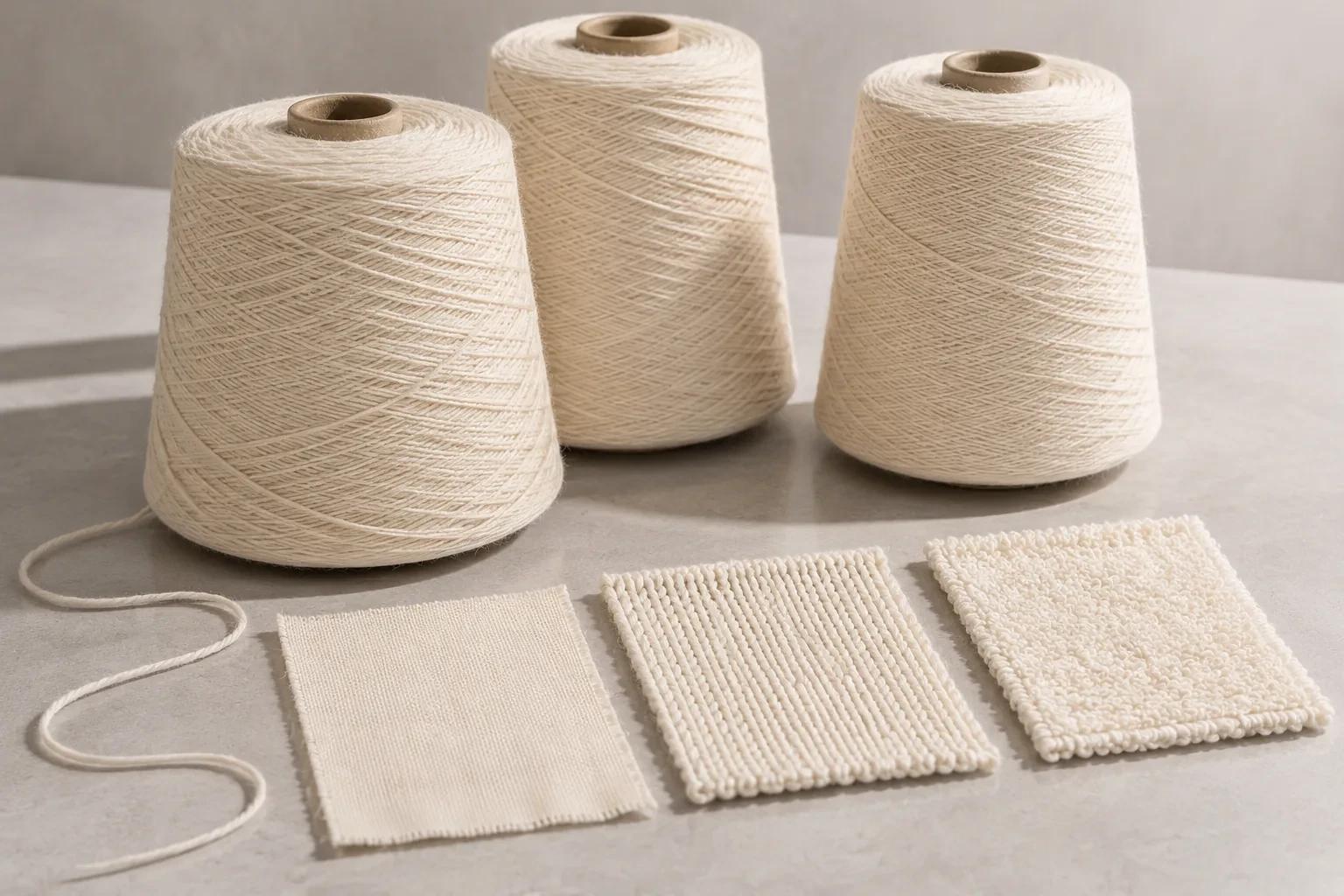
Cotton yarn is used across weaving, knitting, towels, crochet and other textile applications. Selection should begin with the structure and finish of your own product. Explain where the yarn will be used, how it will be processed and which characteristics you will evaluate in the sample.
| Intended use | Details to include in the inquiry | What to check in a trial |
|---|---|---|
| Woven fabric | Warp or weft use, fabric construction, count, twist and preparation requirements | Yarn handling, visible faults and the appearance of the woven sample |
| Knitted fabric | Knitting method, machine requirements, target fabric weight and desired handle | Feeding, loop appearance, surface consistency and the finished fabric's feel |
| Towels and absorbent textiles | The yarn's role in the construction and the intended washing and finishing process | Absorbency, lint release, appearance and dimensions after the intended care cycle |
| Crochet and related products | Preferred thickness, ply, twist, shade and finished article | Stitch definition, handling and consistency against the reference sample |
A fabric trial is especially useful when changing suppliers or replacing an existing yarn. Yarn appearance on a cone is only one part of the assessment; the downstream process can reveal differences that are difficult to judge from a photograph.
Build a Specification That Can Be Quoted Clearly
Use the same terminology on the inquiry, quotation and sample label. A bare count number can be ambiguous if its numbering system is missing, and a count alone does not describe a plied yarn completely. Record the unit, single or plied construction, and twist requirements where they apply.
- Composition: state 100% cotton and any separate requirement for recycled or virgin material.
- Construction: specify yarn count with its numbering system, ply, spinning method if required, and the agreed twist information.
- Appearance: describe the required shade or finish and provide a physical reference when appearance is critical.
- Package: agree the cone or package format, net weight, winding requirements and labeling needed for your process.
- Commercial details: provide estimated quantity, delivery destination, requested schedule and sample requirements.
Taishi Textile's product scope includes 100% cotton yarn, cotton crochet yarn and yarn for knitting, weaving, towels and fabric production. Ask which count and construction can be supplied for your particular use; a company's wider yarn range should not be treated as confirmation that every specification is available in pure cotton.
Use a Sample to Define Bulk Acceptance
Begin with a sample identified by a written specification. Examine yarn appearance, winding and visible variation, then run an appropriate trial using the intended process. Where the finished textile will be washed or otherwise finished, assess it after that process as well as before it.
Agree which checks will determine acceptance. These may include composition verification, count and twist, yarn strength, shade, visible faults, or finished textile behavior. The relevant test method and acceptable limits should be agreed for the order; a visual check alone cannot confirm fiber composition or every performance requirement.
Retain the approved yarn or fabric sample and identify it in the order record. For repeat orders, compare against that reference and the agreed specification. This gives both buyer and supplier a concrete basis for discussing a variation instead of relying on descriptions such as “same quality.”
Keep Pure Cotton and Blended Yarn Decisions Separate
If your product specification requires all-cotton composition, do not substitute a cotton/polyester blend without approval. When composition is flexible, compare candidate yarns through the same fabric construction, finishing process and acceptance checks.
Taishi Textile also supplies cotton polyester blended yarn and polyester spun yarn. These are separate material choices to discuss when developing a product, rather than equivalents to a 100% cotton order. Confirm the selected composition in writing before approving bulk production.
Plan the Inquiry with Taishi Textile
Taishi Textile supports yarn selection, color confirmation, sampling, production scheduling, quality inspection and shipment follow-up for domestic and overseas buyers. For a cotton yarn inquiry, share the end product, manufacturing process, proposed specification and any existing reference yarn or fabric.
This topic also provides a starting point for more focused questions about cotton yarn count selection for knitting, yarn for towel weaving, sample inspection and wholesale order planning. Each should be resolved against the actual product requirement before the bulk specification is finalized.
Questions About Sourcing 100% Cotton Yarn
Does 100% cotton mean the yarn is organic or certified?
No. Fiber composition and certification are separate attributes. If a certification is required, specify it explicitly and verify the relevant documentation for the proposed product and order.
Can the same cotton yarn be used for weaving and knitting?
A yarn may be considered for either process, but suitability depends on its construction and the intended machine and fabric. Provide the application and confirm performance through a relevant sample trial.
How should I request a quote if I do not know the yarn count?
Send a reference yarn or fabric if available, describe the finished product and explain the production process. Ask the supplier to propose a specification for review, then confirm it through sampling before placing the bulk order.
What should be agreed before bulk production?
Confirm composition, construction, shade or finish, the approved sample reference, acceptance checks, package and labeling requirements, quantity and schedule. Send these details with your inquiry so Taishi Textile can discuss an appropriate cotton yarn option.