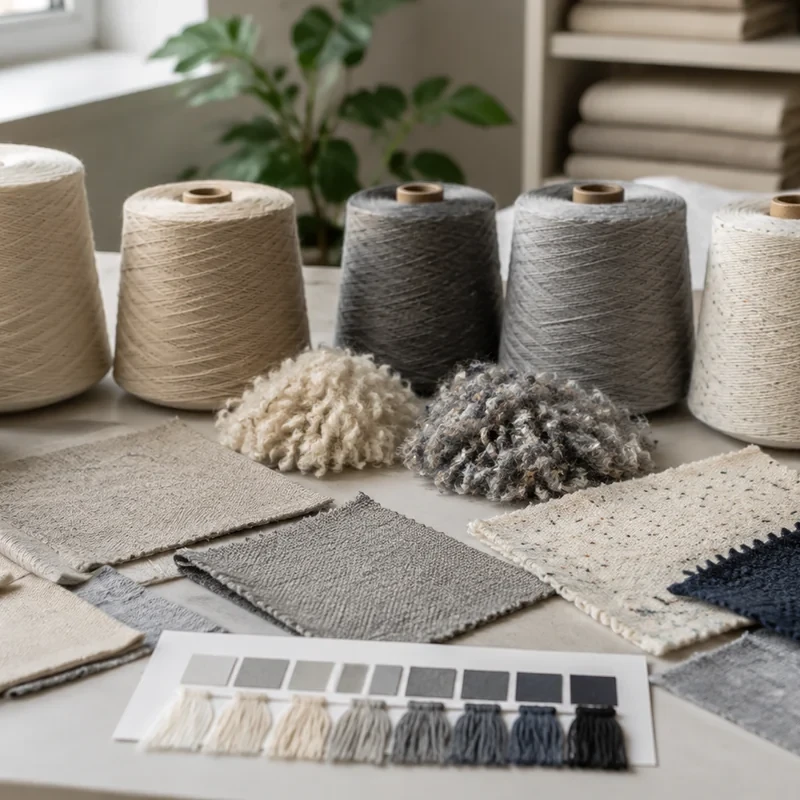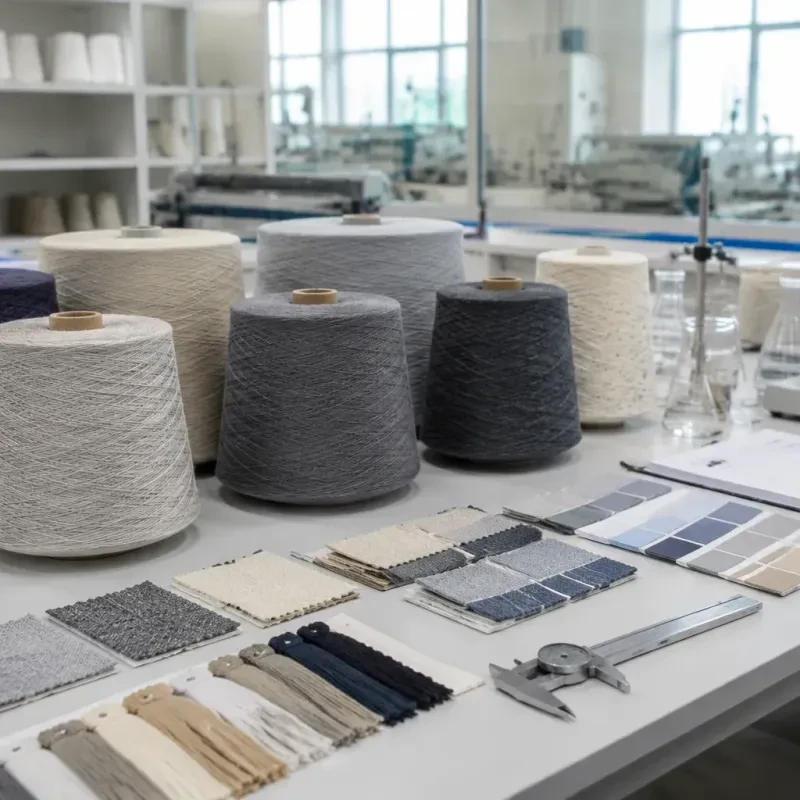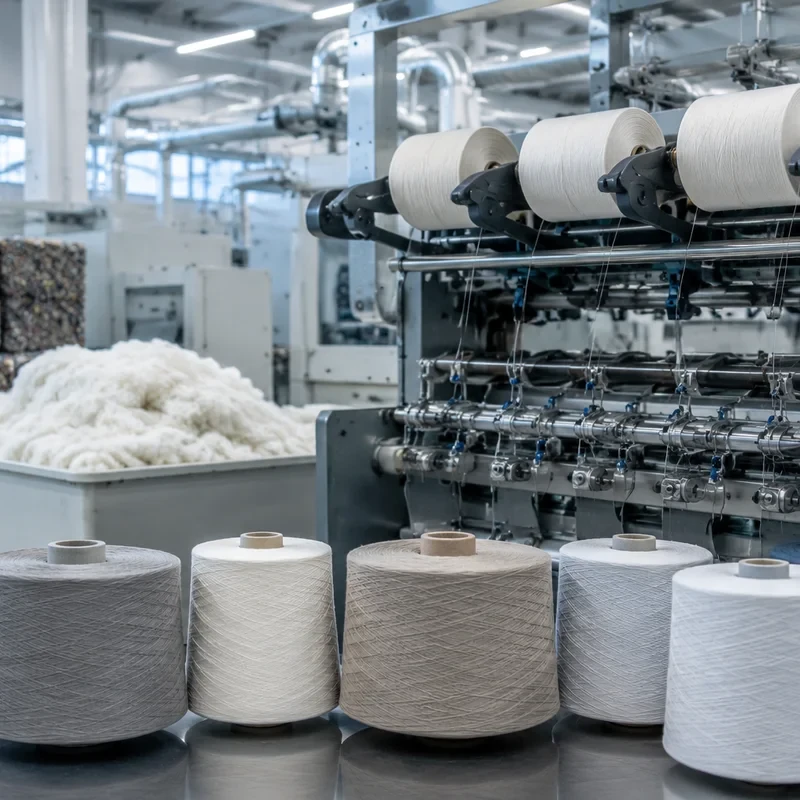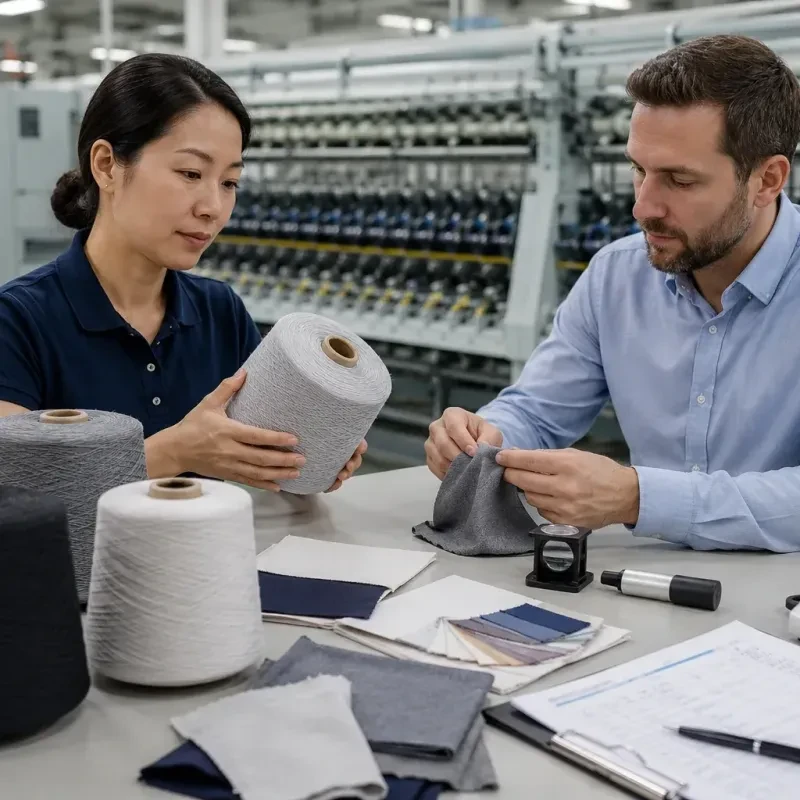
Choosing a recycled yarn manufacturer in China is not only a question of price. Textile buyers also need to confirm whether the supplier can keep yarn quality stable, explain the material source clearly, support sampling, and deliver repeat orders on schedule. A good supplier should help reduce purchasing risk before the first bulk order is placed.
For buyers working with recycled polyester yarn, regenerated yarn, recycled cotton blended yarn, or polyester cotton yarn, the selection process should be practical. The goal is to find a factory that can match the required count, color, twist, strength, and application, while keeping communication direct during production.
Start with the yarn range and real production fit
Before comparing quotations, check whether the manufacturer regularly produces the yarn type you need. A factory that already makes recycled yarn for weaving, knitting, mop yarn, towel yarn, socks, gloves, hammocks, ropes, or fabric applications will usually understand the performance details better than a supplier that only handles trading inquiries.
- Confirm available counts, such as low-count coarse yarns and finer yarns for knitting or weaving.
- Ask whether the yarn can be supplied as single yarn, 2-ply, 4-ply, or 6-ply twisted yarn when needed.
- Check whether recycled polyester, recycled cotton, and cotton polyester blended options are available.
- Match the yarn to the final product instead of choosing only by material name.
Review quality control before asking for a low price
Recycled yarn can vary by raw material, spinning method, color lot, and finishing process. A reliable manufacturer should be able to describe how raw material is checked, how production is monitored, and how finished yarn is inspected before shipment. This matters because small variations can affect fabric appearance, breaking strength, dye tone, and machine performance.
Buyers should ask for information about yarn evenness, strength, color consistency, moisture control, packing, and inspection records. If a supplier cannot explain how quality is controlled, the low price may create hidden costs later through rejected batches, production stops, or customer complaints.
Use samples to test the supplier, not just the yarn
Sampling is useful for checking hand feel, count, color, twist, and application performance, but it also reveals how the supplier works. A manufacturer that responds clearly, records sample details, and confirms specifications in writing is usually easier to cooperate with during bulk production.
When reviewing samples, do not rely only on photos. Test the yarn on the intended machine or with the intended fabric structure when possible. For overseas buyers, it is also useful to keep a sealed reference sample so future shipments can be compared against the approved standard.
Check communication and order follow-up
Many sourcing problems come from unclear communication rather than yarn production alone. Before confirming an order, buyers should make sure the manufacturer can discuss yarn count, color number, packing method, lead time, shipment plan, and after-sales handling in a consistent way.
| Evaluation Point | What to Confirm | Why It Matters |
|---|---|---|
| Product match | Material, count, twist, color, and application | Reduces the risk of unsuitable yarn |
| Quality control | Inspection process and batch consistency | Helps keep repeat orders stable |
| Sampling | Reference sample and written specification | Creates a clear standard before bulk production |
| Delivery | Lead time, packing, and shipment follow-up | Protects the buyer's production schedule |
Consider delivery reliability for repeat orders
A supplier may complete one small trial order, but long-term cooperation depends on whether repeat orders remain stable. Buyers should discuss regular capacity, peak season planning, and how the factory handles changes in color, count, or packing requirements. This is especially important for distributors and textile producers that need continuous supply.
For recycled yarn sourced from China, the best manufacturer is not always the one with the broadest catalog. It is the one that can provide the right yarn for the target product, keep production details transparent, and support the buyer from sample confirmation to shipment.
Final checklist before placing an order
- Confirm the exact yarn application and performance requirement.
- Request samples that match the intended count, color, and structure.
- Check quality control details instead of relying only on a quotation.
- Agree on packing, lead time, inspection, and shipment communication.
- Keep approved samples and written specifications for future repeat orders.
Choosing a recycled yarn manufacturer in China should be a structured decision. When buyers evaluate product fit, quality control, sampling, and delivery together, they are more likely to build a stable supply relationship and avoid preventable production problems.