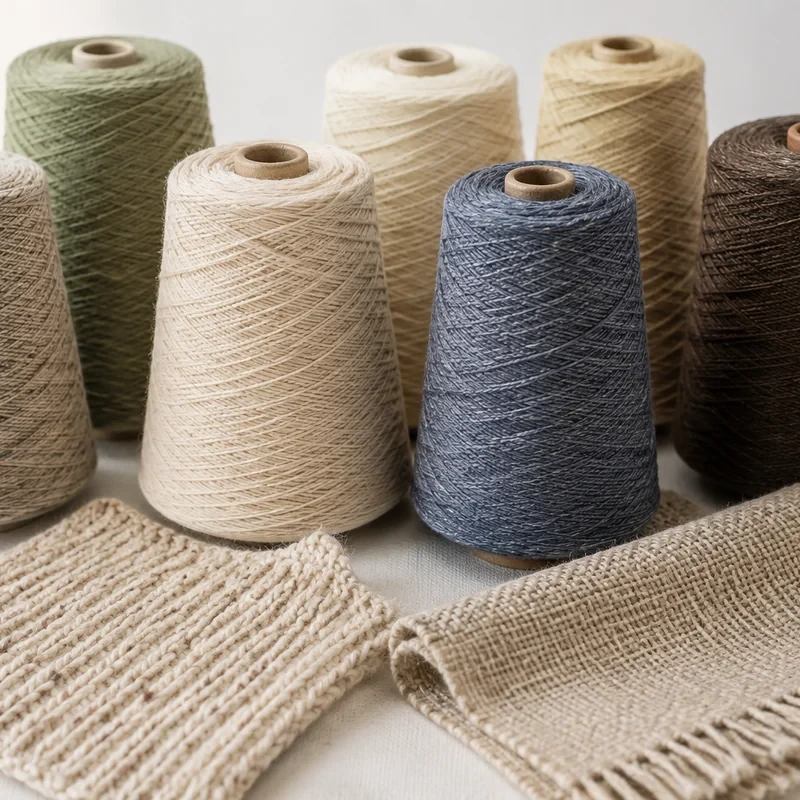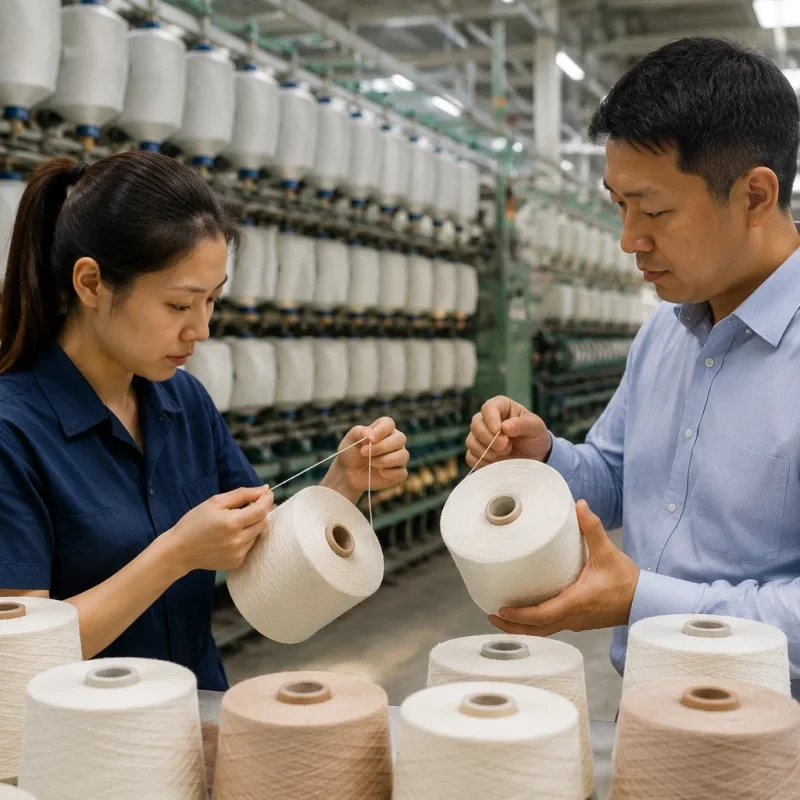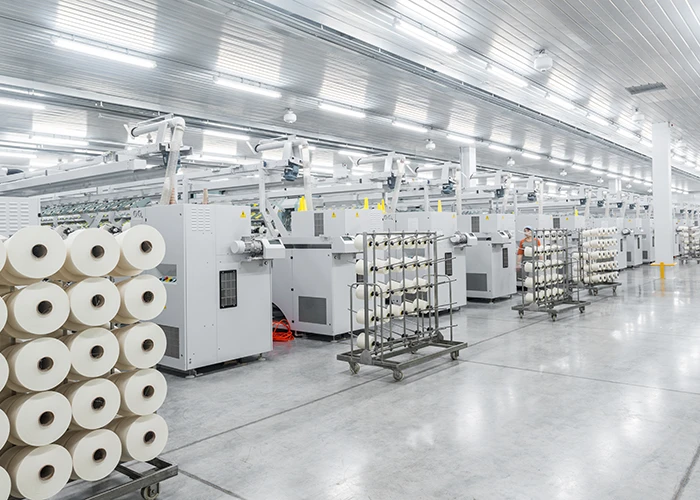
Recycled yarn can be used in both knitting and weaving, but the best choice depends on the structure of the finished product and the way the yarn will be processed. Looking first at the construction, intended feel, and required consistency helps buyers compare suitable yarn options before sampling.
Start with the construction of the end product
Knitted and woven goods place yarn under different conditions. Knitting forms loops, so yarn selection often focuses on how the yarn behaves as loops are made and how the fabric feels after knitting. Weaving interlaces warp and weft yarns, which makes yarn preparation and consistent running through the weaving process important considerations.
For either route, describe the end use clearly when requesting a sample. Useful details include whether the yarn is for a soft knitted item, a towel or fabric construction, a carpet or blanket, or a more structured woven product. These details give the supplier a practical starting point for recommending a count, blend, color treatment, or twist option.
Match yarn count and structure to the process
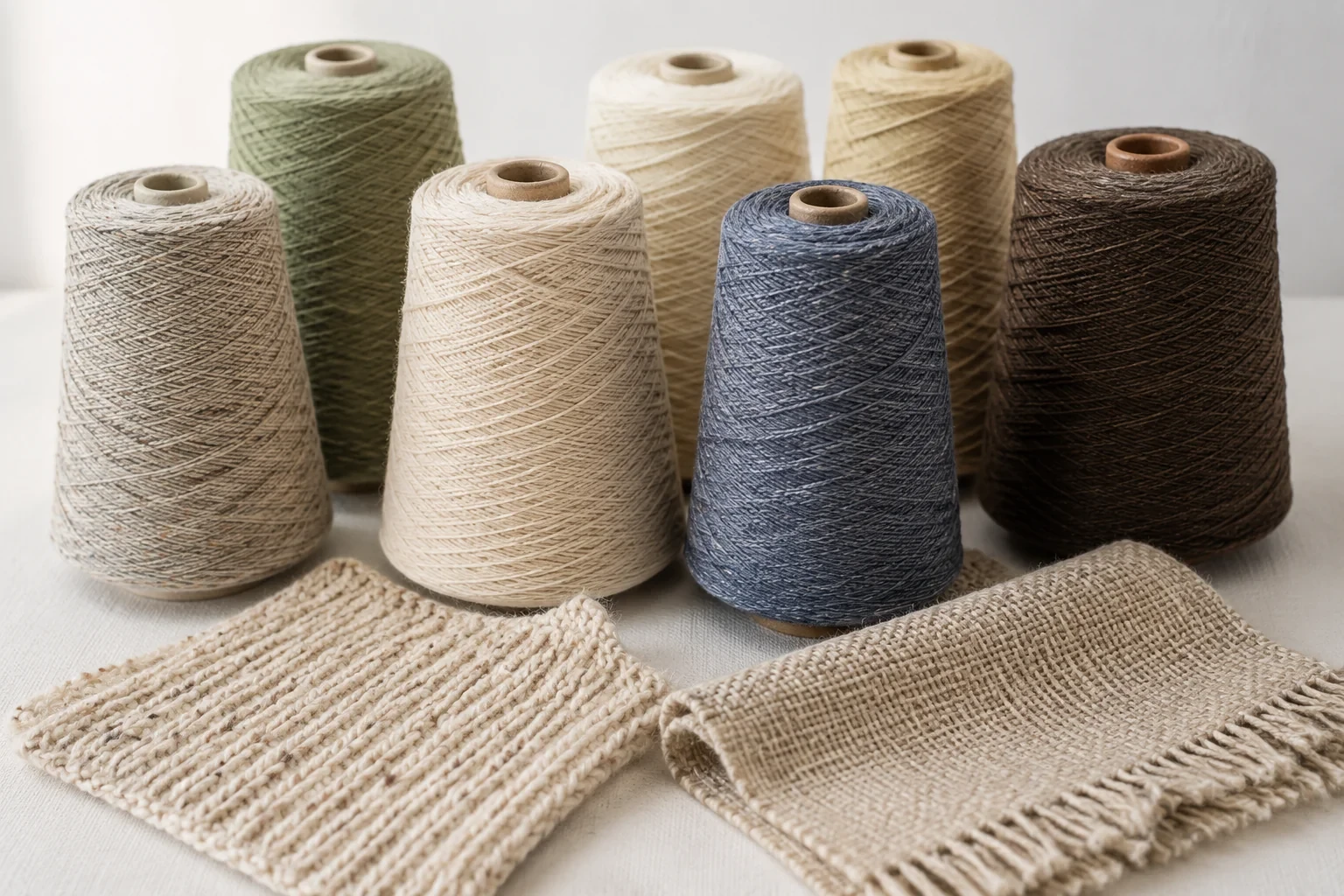
Yarn count affects the scale and character of a textile. A heavier yarn may suit applications that need a more substantial appearance, while a finer yarn can be considered when a lighter construction is required. The appropriate range should be evaluated with the machine settings, fabric construction, and target product rather than chosen by count alone.
Yarn structure is another part of the decision. Open-end carded yarn, ring spun yarn, and twisted yarn have different constructions. A buyer can compare samples in the intended process to see which option is most appropriate for the target fabric or product. When twist is relevant, specify whether a single yarn or a multi-ply twisted yarn is needed for the planned construction.
Consider fiber composition and appearance together
Recycled and regenerated yarn options may use recycled cotton, recycled polyester, or a cotton and polyester blend. Fiber composition can be discussed alongside the desired appearance and use of the finished item. For example, buyers may ask about a recycled blend, a polyester yarn, or a cotton-based option according to the product they are developing.
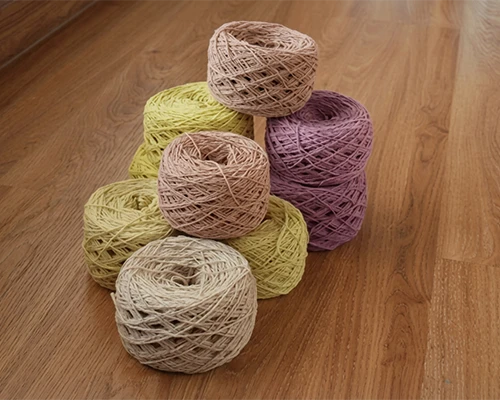
Color should also be confirmed with a physical sample or agreed reference. Melange, dyed, bleached white, and raw-pattern options create different visual effects. Confirming color before production is especially useful when yarn will be used across multiple panels, components, or product batches.
Plan sampling before production scheduling
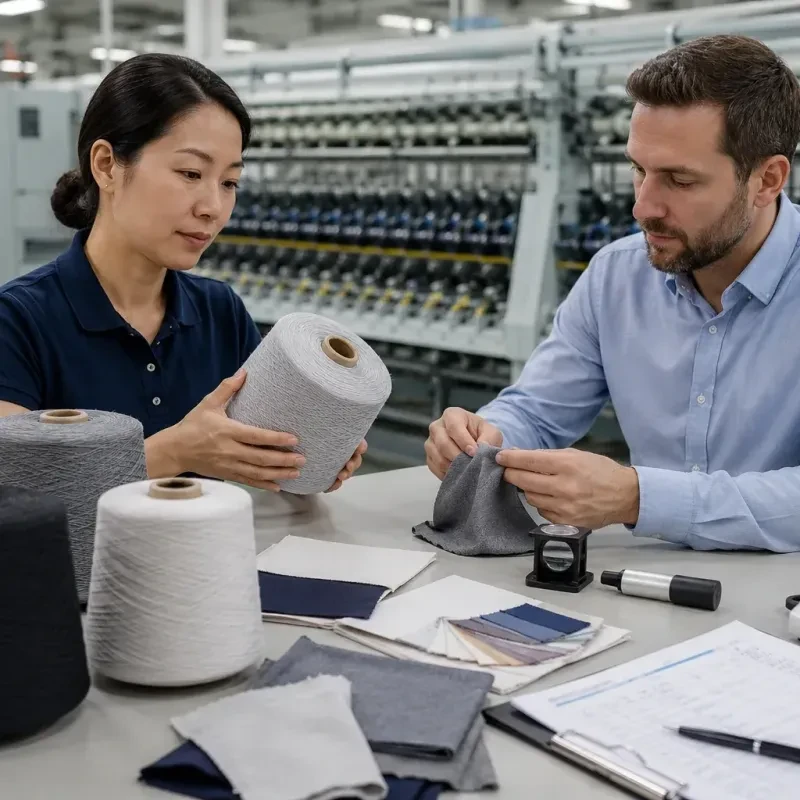
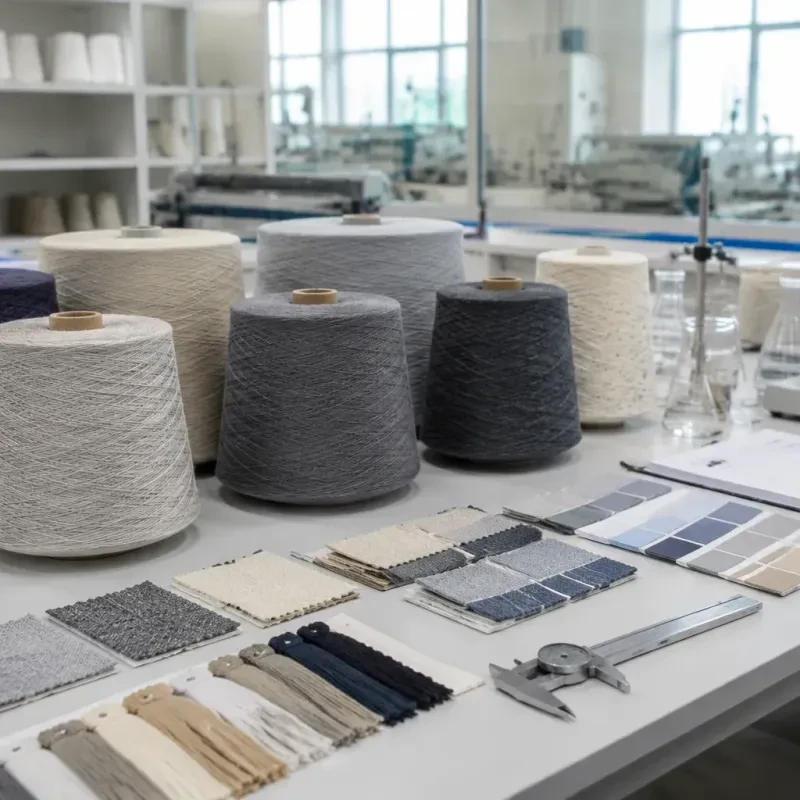
A small sample run gives the development team an opportunity to assess the yarn in the actual knitting or weaving process. Review the result for the intended fabric construction, appearance, and handling. Record the agreed yarn specification and color reference so the production discussion has a clear basis.
For a productive sampling request, provide the application, yarn count range under consideration, required composition, color direction, and any preferred yarn construction. This allows the supplier to prepare a more relevant option and makes later production scheduling and quality inspection easier to discuss.
Questions to ask when comparing recycled yarn options
- What finished product and construction will the yarn be used for?
- Which count range works with the planned knitting or weaving process?
- Is a single yarn or a twisted construction more suitable for the application?
- Which recycled fiber composition and color treatment should be sampled?
- What sample reference should be used to confirm the final yarn choice?
Clear application details turn a general recycled yarn inquiry into a practical development conversation. By comparing samples in the intended knitting or weaving process, buyers can make a more informed choice before confirming production.