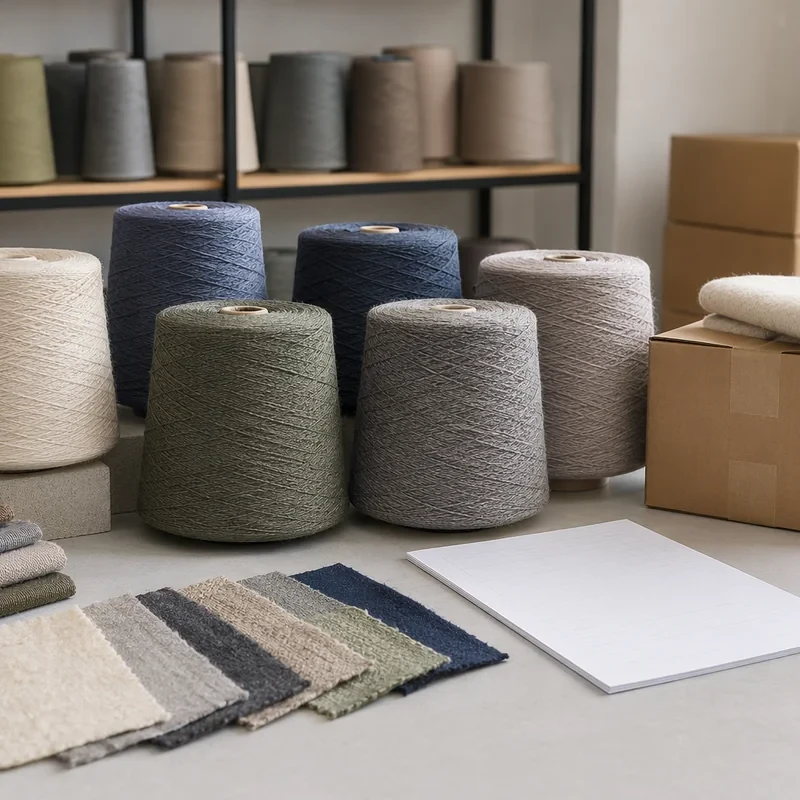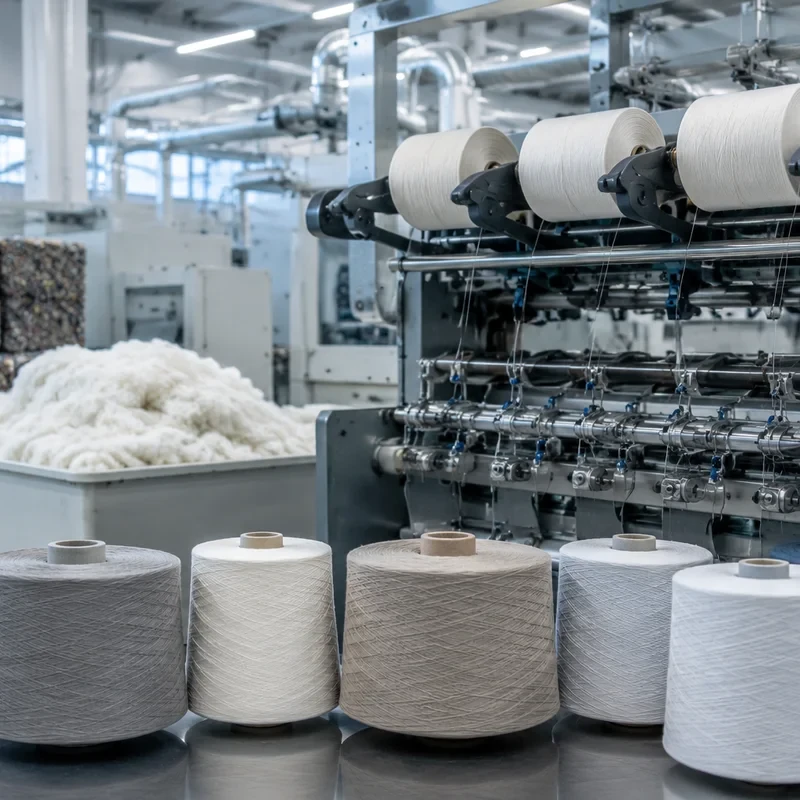
Selecting a regenerated yarn supplier for textile production is a technical sourcing decision, not just a purchasing task. The supplier you choose affects yarn breakage, fabric appearance, production stability, delivery planning, and the total cost of each finished product. A good selection process helps buyers avoid trial-and-error sourcing and makes bulk production more predictable.
Start With the Product You Need to Make
Before comparing suppliers, define the final product clearly. Regenerated yarn for a mop, blanket, towel, woven fabric, knitted fabric, sock, glove, rope, or hammock may require different fiber blends, counts, twist levels, and color standards. If the application is unclear, suppliers can only quote a generic yarn, and that often leads to performance problems during production.
Share the product type, machine type, target hand feel, strength requirement, color requirement, and expected order volume. This information allows the supplier to recommend whether recycled polyester yarn, cotton blended yarn, open end yarn, ring spun yarn, dyed melange yarn, or twisted yarn is more suitable.
Check the Supplier's Product Range
A regenerated yarn supplier with a broader yarn range can usually support more practical comparisons. For example, Taishi Textile supplies regenerated yarn, recycled yarn, recycled 100% polyester yarn, 100% polyester yarn, high tenacity polyester spun yarn, polyester ring spun yarn, cotton yarn, polyester cotton blended yarn, carded yarn, open end yarn, dyed yarn, melange yarn, mop yarn, towel yarn, carpet yarn, blanket yarn, socks yarn, glove yarn, hammock yarn, and rope yarn.
This range matters because many textile buyers need more than one yarn type across different orders. Working with one supplier that understands several applications can reduce communication time and make repeat sourcing easier.
Review Technical Details Before Price
Price should be reviewed after the yarn specification is clear. A low quotation is not useful if the yarn count, composition, twist, color, or packing format does not match production. Ask the supplier to confirm the technical details in writing before sample approval or bulk payment.
- Yarn count and acceptable tolerance
- Fiber composition and recycled or regenerated material source
- Spinning method, such as open end or ring spun
- Twist direction and strength requirement where relevant
- Color standard, shade tolerance, and custom color availability
- Cone weight, bag or carton packing, and loading details
Request Samples and Test Them in Real Conditions
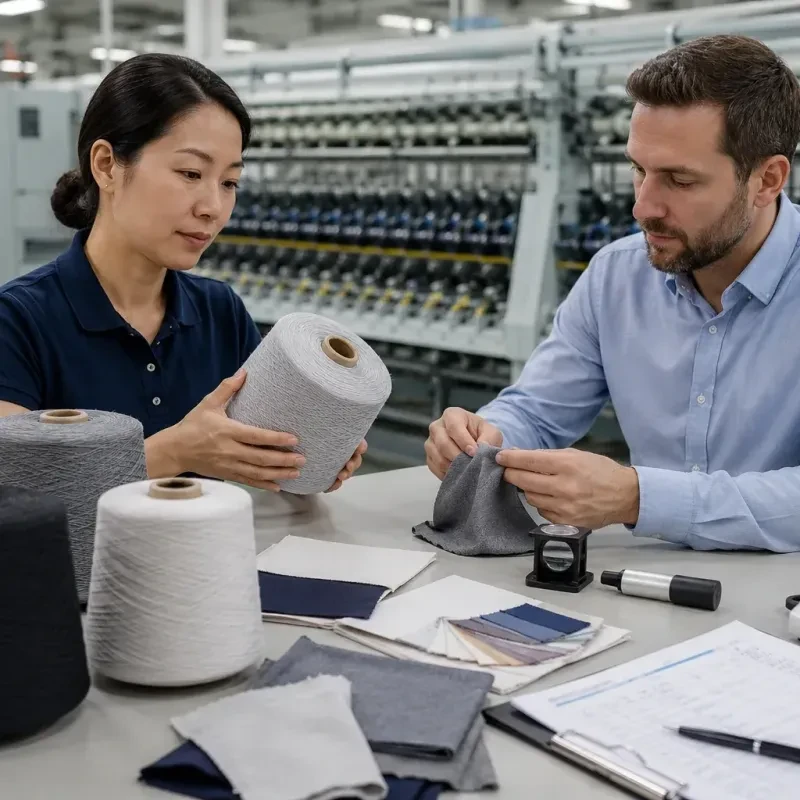
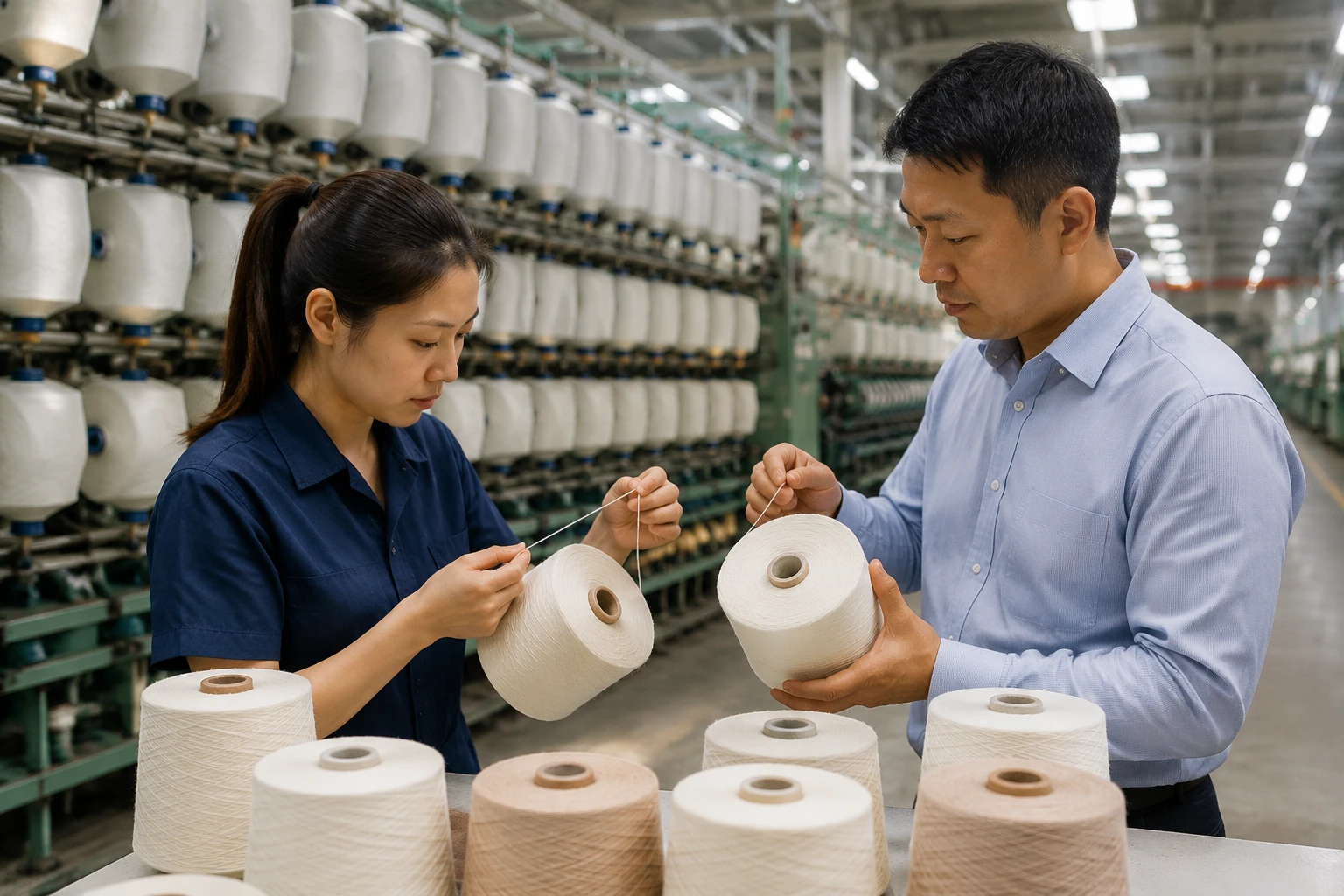
Sample checking should go beyond visual inspection. Run the regenerated yarn on the same or similar machines used for bulk production. Watch for breaks, uneven feeding, excessive lint, shade inconsistency, poor winding, and fabric defects. If the yarn is for weaving or knitting, a short production trial is more valuable than only checking a cone on the desk.
For dyed or melange yarn, compare shade under stable lighting and record the approved sample. For industrial or utility products such as mops, ropes, carpets, and hammocks, strength and durability tests are especially important. For socks, gloves, towels, and blankets, comfort, softness, and repeatable appearance may be more important.
Evaluate Communication and Problem Solving
Supplier communication is part of quality control. A reliable regenerated yarn supplier should ask about the end use, explain suitable and unsuitable applications, and respond clearly when technical details change. If a supplier cannot explain the difference between yarn options, it becomes harder to solve production issues later.
Good suppliers also help buyers balance cost and performance. For some textile products, a regenerated yarn can reduce cost while keeping acceptable quality. For other products, a more specific blend or higher-strength yarn may be necessary. Honest technical advice helps avoid the wrong material choice.
Selection Checklist for Textile Buyers
| Selection Item | What to Confirm | Why It Matters |
|---|---|---|
| Application | Fabric, towel, mop, rope, sock, glove, blanket, or other use | Different products need different yarn behavior |
| Specification | Count, composition, twist, color, packing | Prevents mismatched quotations and samples |
| Sample test | Machine running, strength, shade, hand feel | Shows how the yarn performs in real production |
| Supply capacity | Lead time, repeat order stability, loading plan | Protects production schedules |
| Communication | Technical answers and clear order confirmation | Reduces risk before bulk production |
Working With Taishi Textile
Taishi Textile can support buyers who need regenerated yarn for textile production by discussing the final application first, then matching yarn type, count, color, and packing. This approach is useful for importers, fabric mills, knitting factories, weaving factories, and manufacturers of towels, mops, blankets, carpets, socks, gloves, ropes, and hammocks.
If you are comparing regenerated yarn suppliers, prepare your product details and sample requirements before requesting a quotation. A clear specification helps Taishi Textile recommend a practical yarn option and helps your team evaluate price, quality, and delivery on the same basis.